
Electronic counting machines are widely used for automatic counting and bottling of tablets, capsules and other suitable solid products. For manufacturers planning to automate their packaging process, counting accuracy is naturally one of the most important factors when evaluating a machine.
However, electronic counting machine accuracy cannot be evaluated by looking at a single number alone. Actual counting performance can be influenced by product size, shape, surface condition, feeding stability, dust, machine settings and production speed.
Understanding these factors can help buyers evaluate counting equipment more effectively and prepare suitable product samples for machine testing before purchase.
How Does an Electronic Counting Machine Count Products?
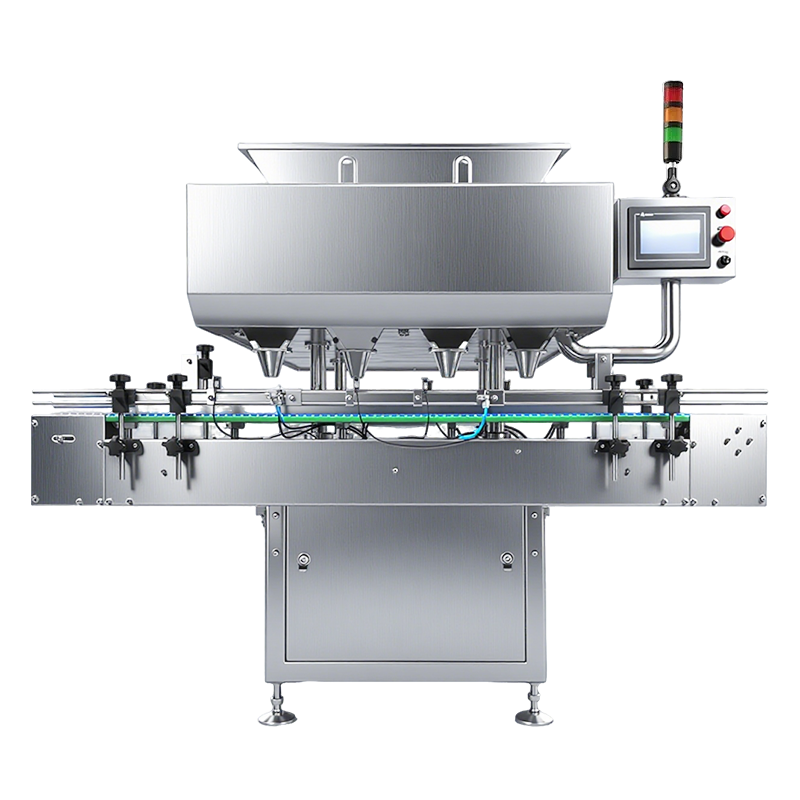
Table of Contents
An electronic counting machine separates products through a controlled feeding system and detects individual pieces as they pass through the counting area.
The detected products are counted electronically, and the machine dispenses the preset quantity into bottles or other suitable containers.
For stable counting, products need to move through the feeding and detection area in a controlled way. If products overlap, stick together, generate excessive dust or move irregularly, counting performance may be affected.
This is why the complete feeding and detection process is just as important as the counting sensor itself.
What Affects Electronic Counting Machine Accuracy?
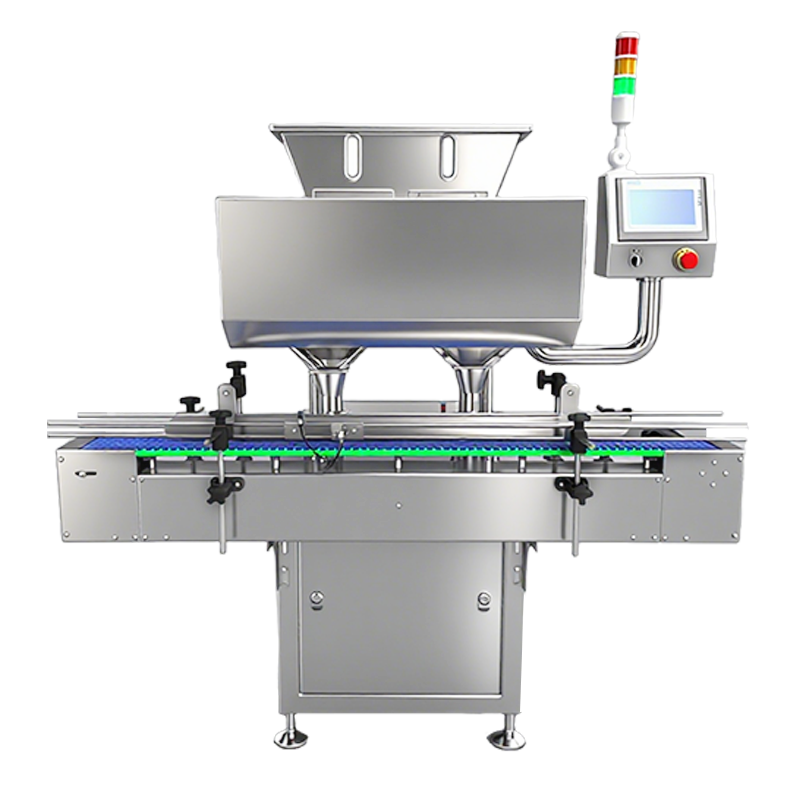
Several factors can influence electronic counting machine accuracy. Buyers should evaluate these conditions based on the actual product rather than relying only on a general machine specification.
Product Size and Shape
Tablets and capsules can vary significantly in diameter, thickness, length and shape.
Regular products are generally easier to separate and feed consistently. Products with unusual shapes or dimensions may require adjustments to the feeding system and operating parameters.
When selecting a machine, providing actual product dimensions and samples helps the equipment supplier evaluate the appropriate configuration.
Dust and Product Surface
Some tablets can generate significant amounts of powder or dust during feeding.
Excessive dust may accumulate around product-contact or detection areas and can affect long-term operating stability if the machine is not properly configured, cleaned and maintained.
Surface characteristics also matter. Smooth capsules, coated tablets, oily softgels and sugar-coated gummies can behave differently during feeding.
Product Feeding Stability
Stable feeding is essential for reliable counting.
Before reaching the detection area, products should be separated as consistently as possible. If products pile up, overlap or move irregularly, the counting process becomes more challenging.
The feeding system therefore needs to be adjusted according to the characteristics of the actual product.
Sensor Detection
The detection system is another important part of the counting process.
Products need to pass through the detection area in a way that allows individual pieces to be recognized reliably. Product dimensions, spacing, transparency, surface condition and feeding behavior can all influence detection conditions.
This is one reason actual product testing is valuable when evaluating a counting machine.
Machine Setup and Adjustment
A counting machine should be configured according to the product and packaging requirements.
Feeding parameters, product flow, bottle positioning and other operating settings may need adjustment when changing products or bottle specifications.
Correct setup helps the complete system operate more consistently rather than relying on the counting sensor alone.
Why Is Counting Accuracy Not Always 100%?
It can be tempting to compare electronic counting machines using a single accuracy percentage. In real production, however, counting performance depends on both the equipment and the product being processed.
For example, two products running on the same machine may behave differently if one is a regular hard capsule and the other is a sticky or irregularly shaped gummy.
Dust, overlapping products, unstable feeding, unsuitable settings and changes in production speed may also influence actual results.
For this reason, buyers should be cautious about treating a general accuracy percentage as a guarantee for every product and operating condition.
A more useful approach is to test the actual product under the intended production conditions.
How Can Counting Accuracy Be Improved?
Improving electronic counting machine accuracy starts with matching the machine configuration to the actual product and production requirements.
Several practical measures can help improve counting consistency:
- Provide accurate product dimensions before machine selection.
- Send representative product samples for testing whenever possible.
- Adjust the feeding system according to product characteristics.
- Keep detection and product-contact areas clean.
- Avoid excessive product accumulation in the feeding area.
- Set an appropriate operating speed for the product.
- Check bottle positioning and conveyor stability.
- Reconfirm machine settings after changing products or bottles.
Regular cleaning and maintenance are also important, particularly when processing products that generate powder, sugar residue or other deposits.
Does Counting Speed Affect Accuracy?
Production speed and counting performance should be evaluated together.
Increasing machine speed means more products must be separated, detected and discharged within the same period of time. The entire system therefore needs to maintain stable product flow at the required production rate.
The highest possible speed is not necessarily the best operating condition for every product.
For a complete bottling line, production capacity also depends on downstream equipment such as the bottle unscrambler, desiccant inserter, capping machine, induction sealing machine, labeling machine and conveyors.
The goal should be stable overall line performance rather than maximizing the speed of one machine independently.Stable electronic counting machine accuracy depends on the complete combination of product feeding, detection, machine settings and operating conditions.
How Should You Test a Counting Machine Before Purchase?
Testing with actual products is one of the most useful steps when selecting electronic counting equipment.Testing with actual products is one of the most useful ways to evaluate electronic counting machine accuracy under realistic operating conditions.
Before testing, provide the machine supplier with information such as:
- Product type
- Product dimensions
- Product shape
- Surface characteristics
- Quantity required per bottle
- Bottle dimensions
- Bottle opening diameter
- Required production capacity
- Photos or videos of the product and bottle
Representative samples allow the supplier to evaluate feeding behavior, counting conditions and bottle handling more realistically.
If several products will run on the same machine, it is useful to provide samples of the products with significantly different dimensions or surface characteristics.
Electronic Counting Machine Accuracy for Different Products
Different products present different feeding and counting conditions.
Tablets
Tablets are common applications for electronic counting machines.
However, tablet dimensions, shapes, coatings and dust levels can vary considerably. Products that generate more powder may require greater attention to cleaning and feeding conditions.
Hard Capsules
Hard capsules generally have regular dimensions, but capsule size and surface characteristics still need to be considered when configuring the machine.
When multiple capsule sizes are required, the supplier should evaluate the intended product range before confirming the machine configuration.
Softgel Capsules
Softgel capsules can have different shapes and surface characteristics compared with hard capsules.
Some softgels may have oily or smooth surfaces, which can affect feeding behavior. Actual sample testing is recommended when selecting a machine for softgel applications.
Gummies
Gummies require particularly careful evaluation because their characteristics can vary significantly.
Stickiness, oil content, sugar coating, flexibility, size and shape may all affect feeding and separation.
Not every gummy is equally suitable for the same counting configuration. For gummy applications, sample testing is especially important before final machine selection.
Frequently Asked Questions
Can an electronic counting machine reach 100% accuracy?
Counting performance depends on the machine configuration, product characteristics, operating settings and production conditions. Instead of relying on an absolute accuracy claim for every application, buyers should evaluate the machine using their actual products and intended production requirements.
Does dust affect counting accuracy?
Excessive dust can influence feeding and detection conditions if it accumulates in important areas of the machine. Proper machine configuration, regular cleaning and maintenance are especially important for products that generate significant powder.
Can one counting machine accurately count different products?
One electronic counting machine may be configured for multiple compatible products, but suitability depends on differences in product size, shape, surface characteristics and feeding behavior. Product samples should be evaluated when the intended product range varies significantly.
How do I verify counting accuracy before buying a machine?
Provide representative product and bottle samples and conduct a machine test under conditions that are as close as practical to the intended application. Confirm not only counting performance but also feeding stability, bottle handling and the required production capacity.
Choosing a Reliable Counting Solution
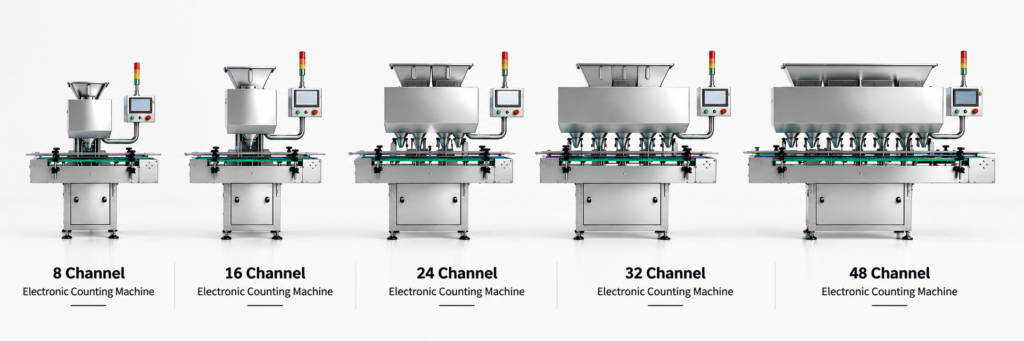
Selecting an electronic counting machine should involve more than comparing channel numbers or a single accuracy figure.
Product characteristics, bottle specifications, required capacity, feeding stability and integration with upstream and downstream equipment should all be considered together.
For buyers who are still deciding between different machine sizes and channel configurations, our guide on How to Choose an Electronic Counting Machine for Tablets and Capsules explains the main selection factors in more detail.
RUIYI MACHINERY provides electronic counting equipment and automatic bottling solutions for tablets, capsules, softgels, suitable gummies and other countable solid products. Machine configuration can be evaluated according to the actual product, bottle and production requirements.
Need to test your product before selecting a counting machine? Contact RUIYI MACHINERY with your product specifications, bottle dimensions and required production capacity to discuss a suitable configuration.